
USDC to RMB Exchange Rate: How to Convert USD Coin to Chinese Yuan
In the rapidly evolving world of digital finance, a common question arises: What currency is USDC exchanged to RMB? This query highlights the growing intersection between cryptocurrency and traditional fiat systems. USDC, or USD Coin, is a prominent stablecoin pegged 1:1 to the US dollar. Its exchange to Chinese Yuan Renminbi (RMB) is a crucial process for traders, investors, and businesses operating across borders. Understanding this mechanism is key to navigating the digital asset landscape.
The direct exchange of USDC to RMB does not occur in a single, standardized marketplace. Instead, the conversion typically involves a two-step process. First, USDC is traded for a major currency like US dollars (USD) on a cryptocurrency exchange. Subsequently, these USD are converted into RMB through traditional foreign exchange channels or banking services. The entire conversion rate is therefore influenced by two primary factors: the 1:1 stability peg of USDC to USD and the prevailing USD/CNY (US dollar to Chinese Yuan) foreign exchange rate set by the financial markets.
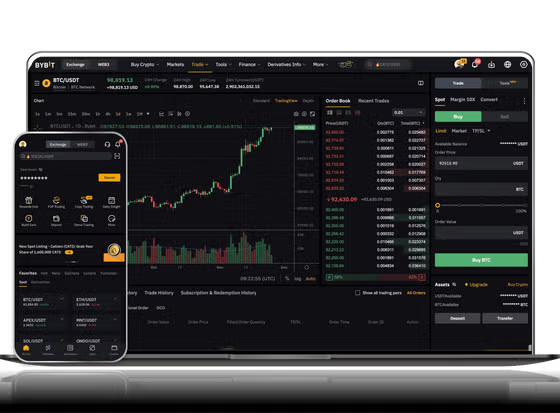
Several platforms facilitate this conversion. Major global cryptocurrency exchanges like Binance, Coinbase, and Kraken allow users to trade USDC for USD or other cryptocurrencies. For the final conversion to RMB, users often rely on licensed digital asset service providers, over-the-counter (OTC) desks, or specific fintech platforms that are authorized to handle fiat currency withdrawals in China. It is critical to use compliant and regulated services to ensure security and adhere to local financial regulations, including China's capital controls and anti-money laundering policies.
The exchange rate you receive when converting USDC to RMB is dynamic. While USDC maintains its dollar peg, the USD/CNY rate fluctuates based on macroeconomic factors, international trade dynamics, and monetary policy from both the US Federal Reserve and the People's Bank of China. Therefore, the final RMB amount will vary slightly from moment to moment. Savvy users monitor these forex trends to execute conversions at favorable rates, much like in traditional currency trading.
Beyond simple conversion, the ability to exchange USDC for RMB unlocks significant utility. It enables remittances with potentially lower fees and faster settlement times than conventional methods. For international commerce, it provides a stable digital dollar equivalent that can be swiftly converted to local currency. Furthermore, it offers investors and traders in relevant jurisdictions a gateway to move funds between the innovative DeFi (Decentralized Finance) ecosystem and the traditional Chinese economy.
In conclusion, the exchange from USDC to RMB is a bridge connecting the reliability of a dollar-backed digital asset with the reality of the Chinese economic sphere. The process, while indirect, leverages both cryptocurrency infrastructure and traditional forex markets. As regulatory frameworks mature and adoption grows, the pathways for this conversion are expected to become more streamlined and accessible, further solidifying the role of stablecoins like USDC in global finance.


发表评论